

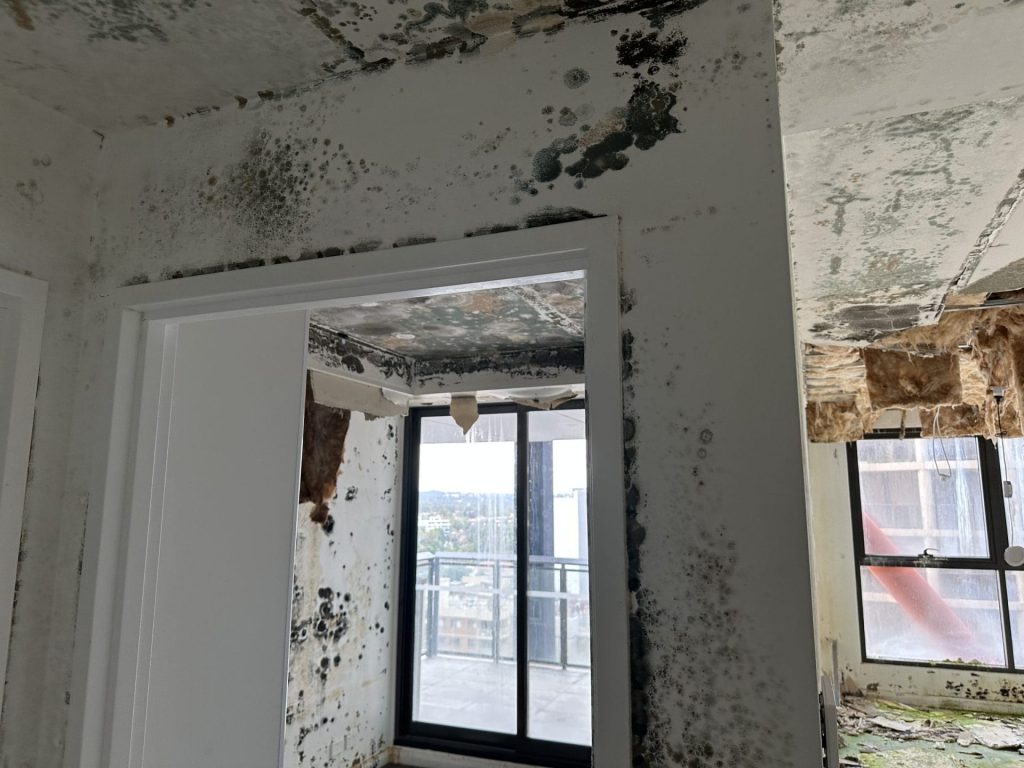
Mould Inspection And Assessment In Sydney: Expert Testing And Remediation Project Management Services
Background to Dampness & Mould Contamination
Mould is a common term for all species of microscopic fungi that grow in the form of multicellular filaments (hyphae) and form spores on fruiting bodies to reproduce. Both fungal spores and hyphae are termed fungal particulates that can become airborne.
Mould has been recognised as a key indoor biological pollutant that may cause adverse health effects to building occupants. Mould can also result in unpleasant odours and damage to building materials, contents and structures.
Mould can grow on most building materials including ceilings, carpets, glass and wood or in heating, ventilation and air conditioning (HVAC) systems. While nutrients, oxygen, moisture and appropriate temperature are all essential for mould growth, moisture is the key component of concern. Identification of sources of moisture and control is the primary way to limit mould growth.
Excess moisture sources can be generated from factors such as inappropriate building design and construction, poor building maintenance and insufficient or inadequate ventilation. Indoor moisture can be affected by occupants’ behaviour and moisture generating activities.
Events such as floods and storms and plumbing problems can also lead to water damage indoors with the subsequent development of mould contamination if not adequately managed. Excess moisture not only increases the risk of mould growth but can also promote the proliferation of other indoor biological pollutants, including bacteria and allergens such as house dust mite, as well as cause an increase in chemical emissions from building materials. All of these can adversely affect human health. Therefore moisture, irrespective of the presence of mould, needs to be minimised in indoor spaces.
For impacted areas the early identification of mould problems, as well as the extent of the problem is important for determining the required remediation. The source of the mould and/or dampness problem needs to be identified so that it can be rectified.
The mould and dampness assessment may include visual inspection using indicators such as visible mould, visible water damage, excess condensation, standing water and mouldy odour; investigation and monitoring of the moisture level of the building structure, materials or the indoor air to help determine the underlying source of the problem. Surface or air sampling of mould spores may assist in determining the extent of mould contamination prior to defining the Scope of Works required for effective remediation, especially where hidden mould is suspected.
However, mould sampling is not recommended for establishing the level of health risk to occupants.
Introduction to Mould Inspection in Sydney
Ensuring a safe and healthy environment within an occupied property is paramount, particularly when it comes to managing dampness, mould contamination and indoor air quality. Mould inspections play a critical role in this regard by identifying potential threats that can compromise both health and property. In addition to health risks, unchecked mould can also result in extensive property damage, affecting structural integrity and incurring costly repairs.
The mould and dampness assessment may include visual inspection using indicators such as visible mould, visible water damage, excess condensation, standing water and mouldy odour; investigation and monitoring of the moisture level of the building structure, materials or the indoor air to help determine the underlying source of the problem. Surface or air sampling of mould spores may assist in determining the extent of mould contamination prior to defining the Scope of Works required for effective remediation, especially where hidden mould is suspected. However, mould sampling is not recommended for establishing the level of health risk to occupants.
By implementing routine mould inspections or prompt inspections following a water ingress event, businesses can reduce the risk of mould contamination, indoor air quality issues and adverse health effects to their employees and others in the workplace, while property owners insurers can maintain property value and eliminate unnecessary additional costs associated with mould damage in the building.
Mould Inspection by Occupational Hygienist
Role of Occupational Hygienists
Occupational hygienists experienced in mould inspections and assessments and mould remediation are integral to the mould contamination inspection and evaluation process due to their technical expertise in identifying and assessing environmental hazards and the management of mould remediation. They conduct comprehensive scientific assessments to determine mould contamination levels and ensure that potential health risks are effectively managed. Their work often extends to performing asbestos and hazardous materials surveys to determine risk of disturbance of such materials during remediation works and required control measures as well as evaluating indoor air quality, making them indispensable in safeguarding workers and other in the affected property.
Identifying Potential Mould Issues
In their initial inspections, occupational hygienists employ various methods to identify potential mould issues. Techniques such as visual inspection and odor detection are employed to locate visible signs of mould growth and unusual smells. Furthermore, they assess moisture sources, evaluate timing and types of health symptoms among occupants, and measure environmental factors like humidity and temperature. These steps are crucial in pinpointing areas susceptible to mould growth and determining the extent of the problem. By using these methods, occupational hygienists ensure a thorough understanding of any mould-related issues, enabling effective identification of the problems and planning of required remediation including involvement of other building and remediation specialists where required.
Various buildings types are routinely identified with dampness and mould contamination including older buildings with chronic dampness issues, newer buildings with water ingress issues (eg. plumbing, waterproofing, rising damp, roof leaks, subfloors) and building under construction (eg. heavy rain or flooding affecting timber frames, concrete slab, plasterboard or other timber elements).
Detailed Testing and Types of Mould Samples
In the realm of mould inspection and assessment, collecting correct and diverse types of samples in many cases is crucial for appropriate evaluation of property conditions in relation to dampness and mould contamination. Common types of samples include airborne mould sampling, surface mould sampling, sampling of mould in concealed cavities, mould in surface dust sampling, mould in bulk materials and mould sampling of building contents. These are often complemented by more specialised samples, such as bacteria and water samples, or samples for DNA analysis to identify the microorganisms to the species level depending on the the purpose of the investigation and the property’s specific conditions.
The testing process begins with a non-intrusive visual inspection, which serves as a preliminary step. When visual methods are insufficient, scientific techniques are employed. Swabs and tape lift samples are used to collect surface samples, while bulk samples involve larger material extractions to detect mould presence including culturable mould. Air sampling, often regarded as the most employes method to check airborne particulates contamination, captures airborne spores to assess concentration levels.
Additionally, advanced methods like qPCR mould sampling target the DNA of mould samples, allowing for a deeper analysis of mould species. Although mould sampling results provide valuable insights, the results should be used alongside other data such as visual observations and moisture measurements to form a complete understanding of the property’s condition. This approach ensures that mould testing is thorough, enabling effective identification of the type and extent of the contamination and the required remediation measures to be implemented.
Assessment and Evaluation of Mould Inspection Findings
The assessment process of mould inspection involves a detailed analysis of the test results to ascertain the potential causes, type and extent of mould presence. This begins with interpreting the visual inspection, moisture measurements and mould air and surface sampling results, which are crucial for understanding characteristics of the mould contamination in relation to observed conditions. This includes presence and level of water damage or elevated humidity indicator mould species or mould genera in directly identifiable locations or in potentially hidden locations. The process involves categorizing the mould contamination into defined conditions to determine required remediation in accordance with The Institute of Inspection, Cleaning and Restoration Certification (IICRC) standard ANSI/ IICRC S520 IICRC S520 Standard for Professional Mold Remediation.
Mould conditions in a building are rated by IICRC S520 into three (3) conditions.
- Condition 1 (normal fungal ecology): an indoor environment that may have settled or airborne mould spores or fragments, or traces of actual mould growth and constituents (e.g., extra cellular materials (ECM), hyphae, mould fragments), that are reflective of a clean and dry indoor environment
- Condition 2: an indoor environment including surfaces and air, which is contaminated with residual mould biomass from a known Condition 3 source in that same indoor environment. This includes spores and fragments, filaments, or extracellular material (ECM) from sporulation, sloughing, or production of other compounds (e.g., mycotoxins and mVOCs.
- Condition 3 (actual growth): an indoor environment contaminated with the presence of mould growth that is active, dormant, dead, non-viable, visible, or hidden.
Where conditions 2 or 3 are detected during an inspection, mould remediation and post-remediation verification will be required..
Evaluating the impact on indoor air quality (IAQ) is a critical aspect of this assessment. Mould can considerably degrade IAQ by releasing fungal particulates, mycotoxins, volatile organic compounds (VOCs) by degradation of building materials and microbial volatile organic compounds (mVOCs), which contribute to unpleasant odors and potential health issues. Hence, the sampling and analysis not only focuses on mould spore levels but also considers environmental factors such as humidity and particulate matter concentrations to gauge the overall air quality and potential exposure of occupants.
By thoroughly evaluating these key indicators, the occupational hygienist can provide actionable insights and recommendations for correction of dampness issues and for professional mould remediation, ensuring a healthier indoor environment. This comprehensive approach is essential for safeguarding buildings and occupants from the adverse effects of mould exposure.
Expert Remediation Services
In Sydney, professional remediation services are essential in addressing mould damage and infestations effectively, especially within industrial ,commercial and residential properties. These services encompass a range of offerings including mould testing, partial or full demolition and removal of mould affected building materials, professional cleaning of structure and content, and appropriate mould treatment solutions of restorable building materials and contents. Additionally, specialized interventions like ventilation improvements (eg. subfloor), waterproofing, and improvement to drainage and rising damp issues are essential to stop the water ingress, dampness and condensation that are the main cause of the mould damage in buildings.
The mould remediation process begins with a comprehensive assessment by the occupational hygienist or the indoor environmental professional (IEP) to determine the extent of mould presence. Identifying and addressing the source of moisture is crucial, as it prevents future mould growth. Effective mould remediation involves isolating contaminated areas by containment and use of air filtration devices (AFD) to place under negative pressure, removing mould damaged porous materials such as plasterboard (source removal), thorough treatment of restorable porous surfaces (eg. unsealed timber), cleaning using surfactants and HEPA vacuums.
Encapsulation techniques for certain materials may be used if source removal is not practicable and after treatment and cleaning is completed and minimal residual contamination remaining that cannot be removed.
Following the remediation, a post remediation verification (PRV) inspection is required preferably by an occupational hygienist to confirm effective remediation and that the remediated area and surfaces have returned to IICRC Condition 1 (normal fungal ecology).
Engaging expert remediation services not only ensures the complete removal of mould but also safeguards the building. If the mould remediation was not carried out appropriately and the causes of the mould growth were not addressed, mould contamination is expected to return and will cause chronic issues.
Cost of Mould Inspection and Remediation
Understanding the cost factors associated with mould inspection and remediation is crucial for industrial ,commercial and residential properties in Sydney. The size of the property and types and materials affected by mould contamination significantly influences the pricing, as larger areas demand more comprehensive inspections. The extent of the mould problem also affects costs; a widespread or hidden mould contamination requires more complex interventions. Additionally, geographical location can impact pricing due to varying local market rates.
In terms of typical pricing, a visual mould inspection, sampling and testing by an occupational hygienist generally ranges from $1,200 to $1,800 + GST plus cost of air and surface mould samples that could range from $75 – $150 per sample.
The cost of an occupational hygienist expert report for legal disputes and tribunals is expected to cost more depending on the complexity of the investigation, sampling and reporting. Depending on the service provider, the cost could start from $2,000 and typically reach $5,000, or $10,000 for more complex cases.
For remediation, expenses can vary widely, starting from $2,000 for small-scale jobs to as much as $50,000 or much more for extensive contamination.
These figures offer a general guideline, but actual costs may differ based on specific circumstances. Engaging in professional mould inspection and remediation services ensures a thorough and effective approach, safeguarding both indoor air quality and structural integrity.
Workplace Health and Safety: Addressing Exposure to Asbestos & Hazardous Building Materials
During mould remediation works, in industrial, commercial and residential buildings, the presence of asbestos and other hazardous building materials such as lead in paint, synthetic mineral fibre (eg. insulation) poses significant health risks to remediation workers and others as well as can cause contamination if disturbed without adequate control measures in place. Exposure to disturbed hazardous materials can cause serious health effects and also risk non-compliance with the Work Health & Safety Legislation.
Identifying and safely managing asbestos and hazardous building materials is not only a legal requirement but also a critical component of workplace health and safety.
Adhering to stringent safety guidelines and regulations is essential to effectively mitigate asbestos and hazardous materials exposure risks. This includes conducting thorough risk assessments, implementing appropriate containment measures, and ensuring the use of personal protective equipment (PPE). Additionally, engaging trained and certified professionals for undertaking pre-remediation hazardous materials survey (hazmat survey) to identify asbestos and hazardous materials likely to be disturbed by the remediation works is crucial to prevent accidental exposure and contamination and to comply with legislative requirements. In general, most occupational hygienist can undertake the mould inspection and asbestos and hazardous materials survey simultaneously.
Ultimately, prioritizing safety measures during mould inspection and mould remediation not only safeguards the health of employee and other in the workplace but also enhances the integrity of operations. Through diligent adherence to health and safety protocols, businesses can protect their workforce while maintaining compliance with health and safety regulations.
Conclusion and Request a Quote
In conclusion, maintaining optimal indoor air quality and contaminant free indoor environment confirmed by regular indoor air quality testing in industrial ,commercial and residential settings is crucial for buildings susceptible to dampness and mould contamination. Comprehensive mould inspection and professional mould remediation services are essential for identifying and eliminating mould issues effectively before they become serious and complex to resolve. Engaging a reputable service provider with distinguished expertise in the field ensures thorough assessment, accurate testing, and meticulous remediation, safeguarding both health and property and reducing unnecessary additional costs.
Given the complexities involved, from identifying the extent of mould contamination, potential presence of asbestos and hazardous materials within a building and the required remediation to restore the building to an acceptable condition , seeking expert assistance is paramount.
We encourage our readers to take proactive steps by requesting a quote for professional mould inspection , testing and assessment services today.
We can also assist in mould remediation project management if required for standard or complex projects. This will not only provide peace of mind and obtain expert advice but also protect the health and safety of all building occupants and reduce unnecessary cost and time delays as far as reasonably practicable.
Our capabilities extend beyond inspection services to sample analysis in our NATA accredited laboratory so we can provide expedited and fast results at the highest level of professionalism.

