

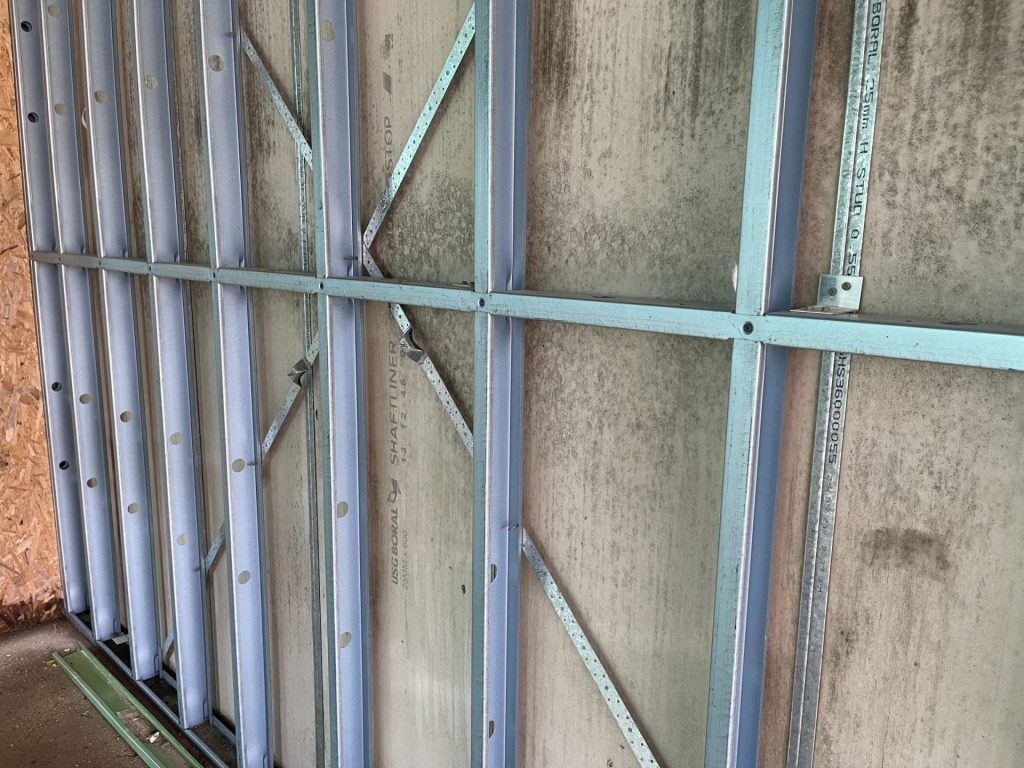
What is Mould?
Mould is a naturally occurring type of fungus that plays an essential role in the environment by breaking down organic matter such as leaves, wood, and other biological materials. It is part of the natural ecosystem and exists almost everywhere in outdoor and indoor environments.
Indoors, however, mould becomes problematic when conditions allow it to grow uncontrollably on building materials and surfaces. Unlike outdoor environments where airflow, sunlight, and natural drying limit its spread, indoor environments can trap moisture and create ideal conditions for growth.
Mould reproduces by releasing microscopic spores into the air. These spores are extremely small and are constantly present in both indoor and outdoor air. Under normal conditions, they are not harmful. However, when spores settle on damp surfaces with sufficient moisture and organic material, they can begin to germinate and form colonies.
Indoor mould growth is most commonly associated with water intrusion, condensation, plumbing leaks, poor ventilation, and elevated humidity levels. When these conditions persist, mould can spread across surfaces, penetrate porous materials, and in some cases develop in hidden building cavities before becoming visible.
How Does Mould Grow?
Mould growth is driven by a combination of environmental conditions that must all be present for development to occur. The most important of these is moisture, without which mould cannot grow.
For mould to establish and spread, it typically requires:
- A consistent moisture source or elevated humidity
- A suitable organic food source
- Temperatures that support biological activity
- Limited airflow or stagnant conditions
In buildings, many commonly used materials provide ideal conditions for mould growth. These include plasterboard, timber framing, insulation, carpet underlay, ceiling tiles, fabrics, and accumulated dust. Even materials that are not traditionally considered “organic” can support mould growth if dust and moisture are present.
One of the most important characteristics of mould growth in buildings is that it often begins out of sight. Moisture can enter wall cavities, roof spaces, or subfloor areas long before any visible signs appear on internal surfaces. This is why mould problems are frequently more advanced than they initially appear.
Under favourable conditions, mould can begin developing within 24 to 48 hours after water exposure. Once established, it can continue to expand and spread spores through air movement, HVAC systems, and physical disturbance of contaminated materials.
Common Causes of Mould in Homes and Buildings
Indoor mould is rarely the root problem on its own. Instead, it is almost always a symptom of an underlying moisture issue. Understanding where the moisture originates from is the key to effective remediation and long-term prevention.
Water Leaks
Condensation
Condensation occurs when warm, moisture-laden air comes into contact with cooler surfaces, causing water droplets to form. This is especially common in areas such as bathrooms, kitchens, laundries, and rooms with poor ventilation.
Over time, repeated condensation can provide enough moisture to sustain mould growth on walls, ceilings, windows, and even inside insulation materials.
In many cases, condensation is a systemic building issue rather than an isolated event, often linked to insulation performance, thermal bridging, or ventilation design.
Flooding and Water Damage
Flood events or significant water ingress can rapidly saturate building materials, creating ideal conditions for mould growth if drying is not immediate and thorough.
Even after visible water has been removed, moisture can remain trapped within porous materials such as plasterboard, timber, and insulation. This residual moisture is often what drives later-stage mould development.
Delayed or incomplete drying significantly increases the risk of widespread contamination.
Poor Ventilation
Poor ventilation allows moisture and indoor pollutants to accumulate over time. Without adequate air exchange, humidity levels can rise and remain trapped in enclosed spaces.
This is particularly problematic in areas such as wardrobes, cupboards, roof cavities, and subfloor zones where airflow is naturally limited.
In modern energy-efficient buildings, reduced natural ventilation can unintentionally increase mould risk if mechanical ventilation systems are not properly designed or maintained.
High Indoor Humidity
High indoor humidity creates a persistent moisture load in the building environment, even in the absence of visible water damage. Everyday activities such as cooking, showering, and drying clothes indoors can contribute significantly.
When humidity remains consistently elevated, materials absorb moisture, creating ideal conditions for mould growth.
This is often a slow-developing but widespread issue, particularly in climates with seasonal humidity variations.
Where Mould Grows Indoors (Common Locations)
Mould can grow on almost any indoor surface when moisture is present. However, it tends to concentrate in areas where moisture accumulates, airflow is limited, or materials remain damp for extended periods.
Common locations include bathrooms, ceilings, walls, window frames, carpets, roof cavities, subfloors, air conditioning systems, and areas affected by previous water damage.
In many cases, visible mould is only part of the problem. A significant portion of contamination exists in hidden building cavities, where moisture is not immediately obvious.
Musty odours are often one of the earliest indicators of hidden mould growth. These odours are caused by microbial volatile organic compounds (MVOCs), which are released during active mould growth.
Types of Mould Found Indoors
Thousands of mould species exist in the environment, but only a limited number are commonly found in indoor environments.
These include Aspergillus, Penicillium, Cladosporium, Alternaria, and Stachybotrys.
Each of these genera has different environmental preferences. Some thrive in persistently damp materials, while others are more commonly associated with intermittent moisture exposure or high humidity conditions.
It is important to understand that colour alone is not a reliable indicator of mould type or risk level. Visual identification can be misleading, as different species may appear similar under varying environmental conditions.
For this reason, laboratory analysis is often required when accurate identification is necessary for assessment or remediation planning.
How Mould Affects Indoor Air Quality and Health
Mould growth can influence indoor air quality through the release of spores, fragments, and microbial by-products into the air. These particles can become airborne through natural air movement, ventilation systems, or disturbance of contaminated materials.
The impact on indoor air quality depends on several factors, including the extent of contamination, ventilation efficiency, and the sensitivity of occupants.
In environments with significant mould growth, occupants may report symptoms such as irritation of the eyes, throat, or respiratory system, as well as persistent odours or general discomfort.
Individuals with asthma, allergies, or pre-existing respiratory conditions may be more sensitive to these environmental conditions.
Signs You May Have a Mould Problem
Mould is not always visible, and in many cases, the most significant contamination occurs behind building materials or within concealed cavities.
Early warning signs often include persistent musty odours, staining or discolouration on walls and ceilings, bubbling paint, warped materials, ongoing condensation issues, and repeated mould regrowth after cleaning.
A key indicator of an unresolved issue is recurrence. If mould returns after cleaning, it typically suggests that the underlying moisture source has not been addressed.
Why Professional Mould Testing May Be Required
Professional mould assessment is used to determine the extent, source, and significance of contamination within a building.
Testing may involve visual inspection, moisture measurement, air sampling, surface sampling, laboratory identification, and post-remediation verification.
In many cases, mould testing is not about simply confirming presence, but about understanding why it is occurring, how extensive it is, and whether conditions remain active.
This is particularly important following water damage events, repeated mould regrowth, or suspected hidden contamination within building structures.
Preventing Indoor Mould Growth
Preventing mould growth requires controlling moisture at both the building and environmental level. Because mould spores are always present in the air, prevention is not about eliminating spores, but about eliminating conditions that allow them to grow.
Effective prevention involves maintaining dry building conditions, improving ventilation, managing indoor humidity, and ensuring that any water intrusion is addressed quickly and thoroughly.
Buildings with unresolved moisture issues or poor ventilation design will continue to experience recurring mould problems, even if visible growth is periodically removed.
Conclusion
Mould is a naturally occurring fungus that becomes problematic in indoor environments when excess moisture allows it to grow on building materials and surfaces. While spores are always present in the air, growth only occurs when environmental conditions support it.
Understanding how mould develops, where it is commonly found, and what building conditions contribute to its growth is essential for early identification and prevention.
Effective management is ultimately not about surface cleaning alone, but about addressing the underlying moisture conditions that allow mould to persist.
Frequently Asked Questions
Yes, mould can still grow in new or recently constructed homes if moisture conditions are present. Construction materials such as plasterboard, timber framing, and insulation can absorb moisture during building phases or from post-construction leaks. Even modern, well-sealed homes may develop mould if ventilation is insufficient or humidity levels remain elevated.
Not always. Cleaning visible mould only addresses the surface growth and does not resolve the underlying moisture issue that caused it. If moisture remains in walls, ceilings, or hidden cavities, mould can return quickly after cleaning. Long-term resolution requires identifying and fixing the source of moisture, not just treating visible contamination.
Yes, significant mould contamination can impact both the condition and perceived value of a property. Persistent moisture issues may indicate hidden structural problems, poor ventilation, or past water damage. In severe cases, remediation may be required before sale or rental, particularly if mould is widespread or located in concealed areas.
“Black mould” is a general term and does not always refer to a single species. While some dark-coloured moulds, such as Stachybotrys, are associated with prolonged moisture exposure, risk depends more on environmental conditions and exposure levels than colour alone. Different mould types can all contribute to indoor air quality issues if growth is extensive or uncontrolled.
Hidden mould is often suspected when there are persistent musty odours, recurring visible growth, or unexplained moisture issues. Other indicators include bubbling paint, warped surfaces, or damp patches that appear and disappear. In many cases, professional moisture testing or inspection is required to confirm whether mould is growing inside wall cavities or concealed building spaces.

About the Author
This article was reviewed and contributed to by Ibrahim Ech, Certified Occupational Hygienist (COH®), occupational hygiene consultant, and Director of SESA and SESALAB.
With more than 20 years of experience in occupational hygiene, environmental health, indoor air quality, and mould investigation, Ibrahim has assessed over 1,000 residential, commercial, government, and industrial properties across Australia.
His expertise includes mould contamination assessment, moisture investigations, post-remediation verification (PRV), asbestos assessment, indoor air quality testing, and environmental laboratory analysis.
Ibrahim is a Full Member of the Australian Institute of Occupational Hygienists (AIOH) and has held Certified Occupational Hygienist (COH®) status since 2012. He is also associated with Australia’s first NATA-accredited laboratory for airborne and surface fungal analysis using direct microscopy.

