

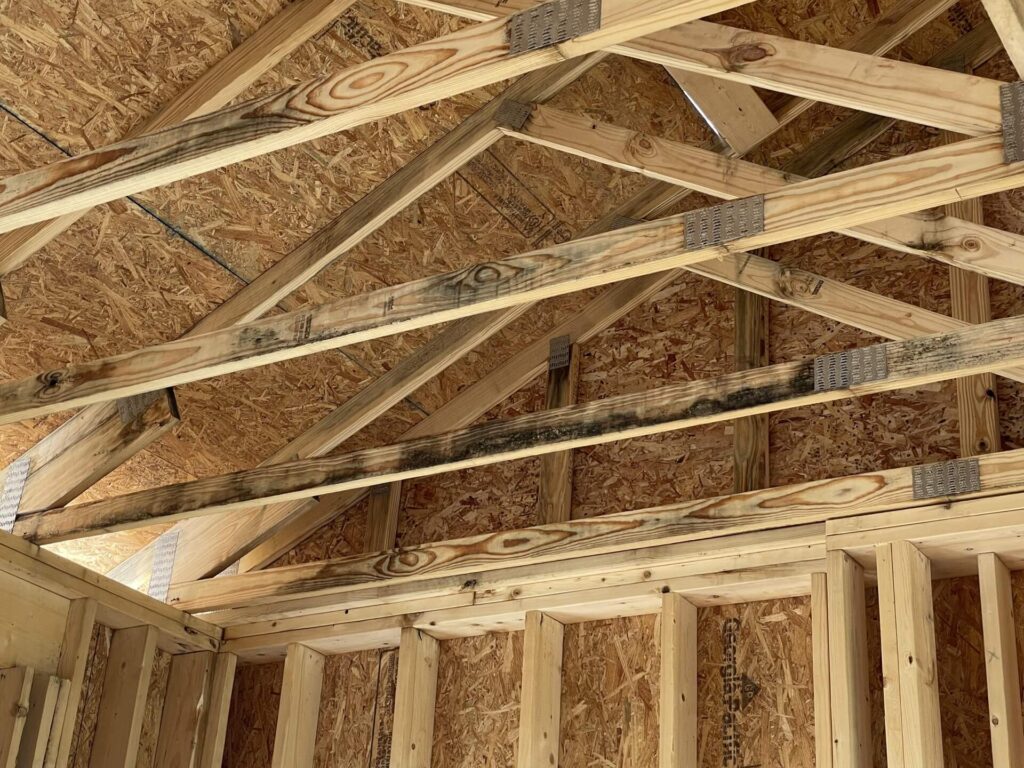
Can Mould Grow in New Homes or Recently Built Properties?
Many people assume mould is mainly a problem in older homes. However, mould can develop in properties of any age, including newly constructed houses and recently renovated buildings.
The age of a property does not determine whether mould will grow. Moisture, humidity, ventilation and the materials used in construction all influence the conditions that allow mould to develop.
Even in a newly built home, water leaks, condensation or moisture trapped within building materials can create conditions that support mould growth. In some cases, the problem may develop in areas that are not immediately visible.
Understanding why mould occurs in newer properties can help homeowners recognise early warning signs and reduce the risk of ongoing moisture problems.
Why Does Mould Develop in New Homes?
Mould is a naturally occurring fungus that reproduces through microscopic spores. These spores are present in both indoor and outdoor environments and can settle on building materials and other surfaces.
However, the presence of spores alone does not mean mould will grow. Moisture is the key factor that allows spores to germinate and develop into colonies.
New homes contain materials such as plasterboard, timber framing, insulation and carpet that can support mould growth when they become damp. Several conditions can contribute to moisture accumulating in these materials.
Water Leaks and Water Ingress
Water leaks can affect properties regardless of their age. Roofing defects, plumbing problems, leaking windows and faults in the building envelope can allow water to enter a home.
If moisture reaches plasterboard, timber, insulation or flooring and remains there, it can create suitable conditions for mould growth.
In some cases, water may enter concealed spaces without immediately producing visible signs on internal walls or ceilings. This can allow moisture-related problems to develop before they are noticed.
Condensation and High Humidity
Condensation occurs when warm, moisture-laden air comes into contact with cooler surfaces. Water droplets can form on windows, walls, ceilings and other parts of a building.
Bathrooms, kitchens and laundries are particularly susceptible because everyday activities such as showering, cooking and washing release moisture into the air.
When this moisture is not adequately removed, indoor humidity can remain elevated. Over time, damp conditions may develop on surfaces and materials, increasing the likelihood of mould growth. Poor indoor environmental conditions can also affect indoor air quality.
Poor Ventilation
Ventilation helps remove excess moisture and maintain suitable indoor conditions. When air exchange is inadequate, moisture from everyday household activities can accumulate.
This can be particularly problematic in wardrobes, cupboards, roof cavities and subfloor areas where natural airflow is limited.
In newer, energy-efficient homes, reduced natural air exchange can also contribute to moisture accumulation if ventilation systems are not properly designed or maintained.
Moisture Within Building Materials
Mould does not always develop on surfaces where it can be easily seen. Moisture can accumulate within plasterboard, insulation, timber framing and other porous materials.
If these materials remain damp, mould may establish itself inside wall cavities, ceiling spaces and other concealed areas.
This is one reason why moisture problems in newer homes can sometimes go unnoticed. The visible surfaces may appear unaffected even when moisture is present within the building materials.
Can a New Home Have Hidden Mould?
Yes. Mould can develop in concealed areas of newly built properties when moisture enters spaces that are not easily visible.
Wall cavities, roof spaces, subfloors and areas behind cabinetry can be affected, particularly when building materials remain damp for extended periods.
Unlike surface mould, concealed growth may not be immediately noticeable. Persistent musty or earthy odours, unexplained staining, bubbling paint and recurring condensation can indicate that moisture is affecting parts of the building.
These signs do not necessarily confirm mould growth, but they may indicate an underlying moisture problem that needs further attention.
How Can You Recognise a Potential Mould Problem in a New Home?
Mould is not always immediately visible, particularly when moisture affects concealed building materials. Recognising changes within the property can help identify potential problems before they become more extensive.
Common warning signs include:
- Persistent musty or earthy odours.
- Discolouration on walls, ceilings or other surfaces.
- Bubbling, peeling or blistering paint.
- Repeated condensation on windows and walls.
- Building materials that remain damp after water exposure.
- Mould that repeatedly returns after cleaning.
These signs can indicate moisture-related problems, although they do not independently confirm the presence or extent of mould.
Where concerns persist, further investigation may be necessary to understand the conditions affecting the building. A professional mould inspection and assessment can help investigate suspected moisture-related problems.
What Should You Do If You Find Mould in a New Home?
If mould appears in a newly built or recently purchased property, the first priority should be understanding what is causing the moisture.
Check for possible plumbing leaks, roof defects, water ingress, condensation and areas where ventilation may be inadequate.
It is also important to consider whether building materials have been exposed to water during construction or following a leak. Materials that remain damp can provide conditions that support continued mould growth.
Simply cleaning visible mould may not resolve the underlying issue if the moisture source remains.
Repeated growth, persistent odours or signs of water damage should not be ignored. Addressing the conditions contributing to mould is essential for preventing the problem from continuing.
Can Mould Be Prevented in Newly Built Properties?
Preventing mould requires maintaining appropriate moisture conditions throughout the building. Although it may not be possible to eliminate all mould spores from indoor environments, reducing excess moisture can help limit the conditions that support growth.
Homeowners can reduce the likelihood of mould developing by:
- Addressing plumbing leaks and water ingress promptly.
- Ensuring bathrooms and kitchens have adequate ventilation.
- Managing indoor humidity levels.
- Avoiding prolonged moisture accumulation on building materials.
- Investigating persistent condensation and dampness.
- Ensuring materials affected by water damage are properly dried.
Regular attention to leaks, ventilation and moisture levels can help prevent small problems from developing into more extensive building issues.
Conclusion
Mould can develop in newly constructed homes when leaks, condensation, poor ventilation or trapped moisture create suitable conditions for fungal growth.
A property’s age does not eliminate the risk. Recognising early warning signs and addressing moisture problems promptly can help prevent mould from becoming a more extensive building issue.
Understanding how moisture affects building materials is essential for maintaining healthier indoor environments and protecting the condition of new and existing properties.
Frequently Asked Questions
Yes. Mould can develop in brand-new houses if building materials are exposed to excessive moisture. Plumbing leaks, construction-related moisture, condensation and inadequate ventilation can all contribute to mould growth.
Under favourable conditions, mould can begin developing within 24 to 48 hours after water exposure. The rate of growth depends on moisture availability, temperature, building materials and environmental conditions.
Common causes include water leaks, condensation, high indoor humidity, poor ventilation and moisture trapped within building materials. Identifying and addressing these conditions can help prevent further growth.
Yes. Mould can develop inside wall cavities when moisture enters plasterboard, timber framing or insulation. Because this growth is concealed, it may not become apparent until musty odours, staining or other warning signs appear.
Common warning signs include persistent musty odours, discolouration on walls and ceilings, bubbling paint, recurring condensation and mould that returns after cleaning. These signs may indicate an underlying moisture problem.

About the Author
This article was reviewed and contributed to by Ibrahim Ech, Certified Occupational Hygienist (COH®), occupational hygiene consultant, and Director of SESA and SESALAB.
With more than 20 years of experience in occupational hygiene, environmental health, indoor air quality, and mould investigation, Ibrahim has assessed over 1,000 residential, commercial, government, and industrial properties across Australia.
His expertise includes mould contamination assessment, moisture investigations, post-remediation verification (PRV), asbestos assessment, indoor air quality testing, and environmental laboratory analysis.
Ibrahim is a Full Member of the Australian Institute of Occupational Hygienists (AIOH) and has held Certified Occupational Hygienist (COH®) status since 2012. He is also associated with Australia’s first NATA-accredited laboratory for airborne and surface fungal analysis using direct microscopy.

