

What Are Noise Hazards in the Workplace? Types, Limits, and Controls
Workplace noise is one of the most widespread yet frequently overlooked occupational hazards. Whether it is the continuous drone of heavy industrial machinery or the sudden crack of a pneumatic nail gun, hazardous noise can cause permanent, irreversible hearing damage.
In Australia, workplace hearing loss remains a major occupational health issue. According to Safe Work Australia, the vast majority of accepted workers’ compensation claims for noise-induced hearing loss (NIHL) come from tradespeople, labourers, and machinery operators exposed to high noise levels over long periods.
Understanding what constitutes a noise hazard, how noise levels are measured, and what regulatory standards apply is essential for maintaining a safe and compliant working environment.
What is a Noise Hazard?
A noise hazard is any unwanted or excessive sound in the workplace that has the potential to cause damage to a person’s hearing, increase stress, or create safety risks by interfering with communication and warning signals.
Sound intensity is measured in decibels (dB). Because the decibel scale is logarithmic, a small numerical increase represents a massive rise in sound energy. For example, a 3 dB increase in noise level doubles the total sound energy.
Workplace noise hazards generally fall into three primary categories:
|
Noise Hazard Type
|
Description
|
Common Workplace Examples
|
|---|---|---|
|
Continuous Noise
|
Unbroken, persistent sound that remains at a relatively constant level over time.
|
Industrial generators, ventilation fans, conveyor belts, processing machinery.
|
|
Intermittent Noise
|
Sound levels that rise and fall rapidly or stop and start at irregular intervals.
|
Circular saws, angle grinders, drive-by traffic, heavy equipment operation.
|
|
Impulse / Impact Noise
|
A sudden, brief burst of high-intensity sound lasting less than one second.
|
Explosions, drop forges, riveting guns, nail guns, sledgehammer blows.
|
Health Effects of Hazardous Noise Exposure
Exposure to excessive workplace noise affects the delicate sensory hair cells (cilia) inside the cochlea of the inner ear. Unlike some physical injuries, damaged inner ear hair cells cannot regenerate.
Health conditions associated with workplace noise exposure include:
- Noise-Induced Hearing Loss (NIHL): Continual exposure to hazardous sound gradually destroys inner ear hair cells, leading to permanent hearing loss. NIHL often develops slowly without pain, making it hard to notice until significant damage has occurred.
- Tinnitus: A persistent ringing, buzzing, or humming sensation in the ears. Tinnitus can be temporary after short exposure to loud noise or become a permanent, distressing lifelong condition.
- Temporary Threshold Shift (TTS): Temporary hearing dullness or “stuffed ears” experienced after leaving a noisy environment. While hearing usually recovers after a rest period, repeated TTS indicates that permanent damage is occurring.
- Hyperacusis: An extreme sensitivity to everyday sounds, causing moderate noise levels to feel uncomfortable or painful.
- Non-Auditory Health Impacts: Prolonged noise exposure triggers elevated stress responses, contributing to fatigue, elevated blood pressure, reduced concentration, and an increased risk of workplace accidents.
Note on Ototoxic Chemicals: Certain workplace chemicals—such as solvents (toluene, xylene, styrene), heavy metals (lead, mercury), and asphyxiants—are ototoxic. This means they can cause hearing loss or multiply the damaging effects of noise when inhaled or absorbed through the skin alongside noise exposure.
Australian Workplace Exposure Standards for Noise
Under Australian Work Health and Safety (WHS) Regulations, duty holders must ensure that workers are not exposed to noise levels that exceed the national Workplace Exposure Standard for Noise.
The exposure standard features two specific limits:
- Eight-Hour Equivalent Continuous Noise Level (LAeq,8h): 85 dB(A). This represents the maximum allowable average noise exposure over a standard 8-hour work shift.
- Peak Sound Pressure Level (LCpeak): 140 dB(C). This is the absolute maximum peak noise level permitted for any sudden, impulse sound (such as an impact tool or explosion).
Sound Levels in Context
To help gauge sound intensity in everyday workplace environments:
- 50 dB(A): Quiet office environment; suitable for tasks requiring high concentration.
- 70 dB(A): Routine office or retail background noise; allows normal conversation.
- 80 dB(A): Action level where noise management planning should begin.
- 85 dB(A): National exposure standard limit; voice must be raised significantly to communicate with someone one metre away.
- 100 dB(A): Angle grinder or jackhammer; exposure without protection can cause damage in minutes.
- 140 dB(C): Peak limit for impulse noise; can cause instant, permanent structural damage to the ear.
If workers need to raise their voices to communicate with a person standing one metre away, the surrounding noise level is likely approaching or exceeding 85 dB(A).
Managing Noise Hazards: The Hierarchy of Controls
WHS legislation requires employers (PCBUs) to manage noise risks by applying the Hierarchy of Controls. Relying solely on personal protective equipment (PPE) like earplugs is considered a last resort.
- Elimination: Completely remove the source of noise (e.g., redesigning a process so automated, silent equipment replaces manual hammering).
- Substitution: Replace old, noisy machinery with modern, quieter alternatives or purchase low-noise saw blades and tools.
- Engineering Controls: Modify machinery or workspace acoustics by fitting mufflers, placing acoustic barriers or sound-absorbing panels around gear, or isolating operators in soundproof booths.
- Administrative Controls: Design work schedules to limit the time individual workers spend near noisy plant, establish designated hearing protection zones, and schedule high-noise tasks outside peak shift hours.
- Personal Protective Equipment (PPE): Provide suitable, correctly rated hearing protection (earplugs or earmuffs) that matches the specific frequency profile of the noise hazard.
The Role of Monitoring and Audiometric Testing
When noise levels cannot be kept below regulatory thresholds through engineering or administrative controls, specialised testing is necessary to protect worker health and demonstrate legislative compliance:
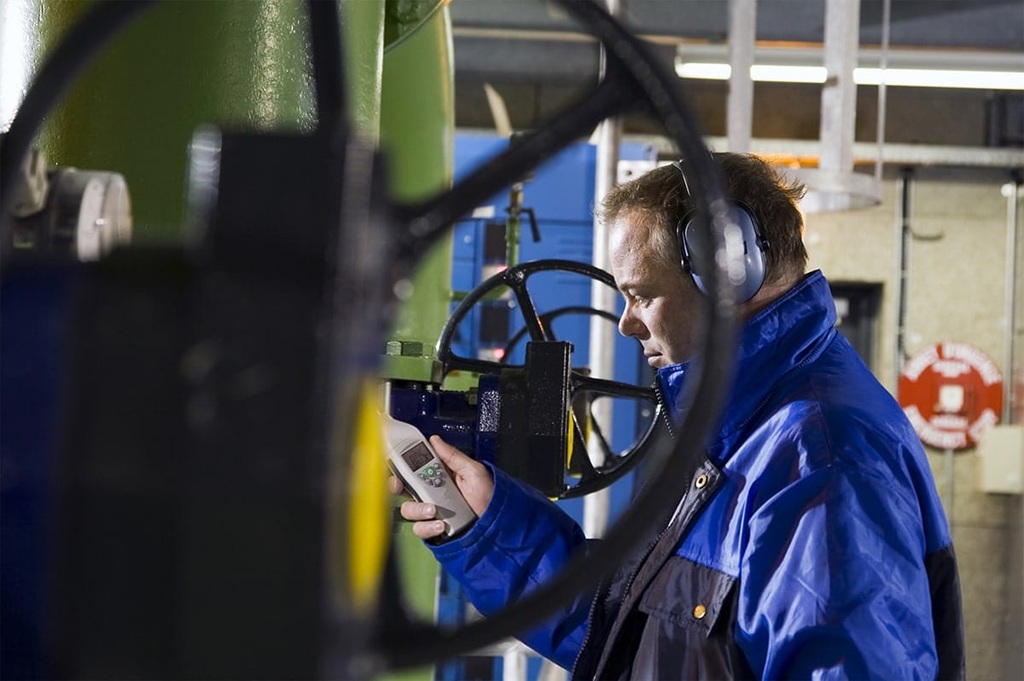
- Noise Surveys and Risk Assessments: Systematic sound level measurements—including spot readings, octave band frequency analysis, and personal noise dosimetry—determine exact worker exposure levels and delineate required hearing protection areas.
- Audiometric (Hearing) Screening: Under WHS regulations, if a worker is frequently required to wear hearing protection to manage noise above the exposure standard, the employer must provide regular audiometric testing. Baseline testing should occur within three months of commencing work, followed by ongoing monitoring (typically every two years) to catch early signs of hearing loss.
To evaluate noise levels, identify ototoxic risks, and confirm regulatory compliance in your facility, review workplace noise survey and audiometric screening services to ensure your monitoring strategies meet Australian Standard AS/NZS 1269 requirements.
Frequently Asked Questions About Workplace Noise Hazards
Because decibels are measured on a logarithmic scale, an increase of 3 dB(A) represents a doubling of the total sound energy. This means that exposure time must be halved for every 3 dB increase above the 85 dB(A) standard. For example, a worker can safely be exposed to 85 dB(A) for 8 hours, but only for 4 hours at 88 dB(A), and just 2 hours at 91 dB(A).
Ototoxic substances are workplace chemicals—such as certain solvents (toluene, xylene), heavy metals (lead), and gases (carbon monoxide)—that damage the inner ear or auditory nerve. When workers are exposed to both ototoxic chemicals and noise simultaneously, the combined effect can cause significantly greater hearing loss than noise exposure alone.
Yes. Under Australian WHS Regulations, if a worker is required to frequently wear personal hearing protection because workplace noise exceeds the exposure standard (85 dB(A) L Aeq,8h or 140 dB(C) L CPeak ), the employer must provide audiometric testing. Baseline testing must be provided within three months of starting the role, followed by regular monitoring at least every two years.
No. Hearing protection relies heavily on proper fit, consistent use, and correct attenuation rating (SLC80). If hearing protection is fitted incorrectly or removed briefly in a high-noise area, its real-world protection drops dramatically. Furthermore, hearing protection does not eliminate non-auditory stress or communication hazards created by high background noise.

About the Author
Ibrahim Ech | Certified Occupational Hygienist (COH®) & Director at SESA
Reviewed and contributed to by Ibrahim Ech, a Full Member of the Australian Institute of Occupational Hygienists (AIOH) with COH® status since 2012.
With over two decades of experience across commercial, industrial, and government sectors, Ibrahim specialises in occupational hygiene assessments, noise exposure evaluations, workplace hazard controls, and indoor environment evaluations.
As Director of SESA, he leads a team of specialists helping Australian workplaces achieve compliance with WHS noise regulations and prevent occupational noise-induced hearing loss through scientific measurement and practical engineering solutions.

