

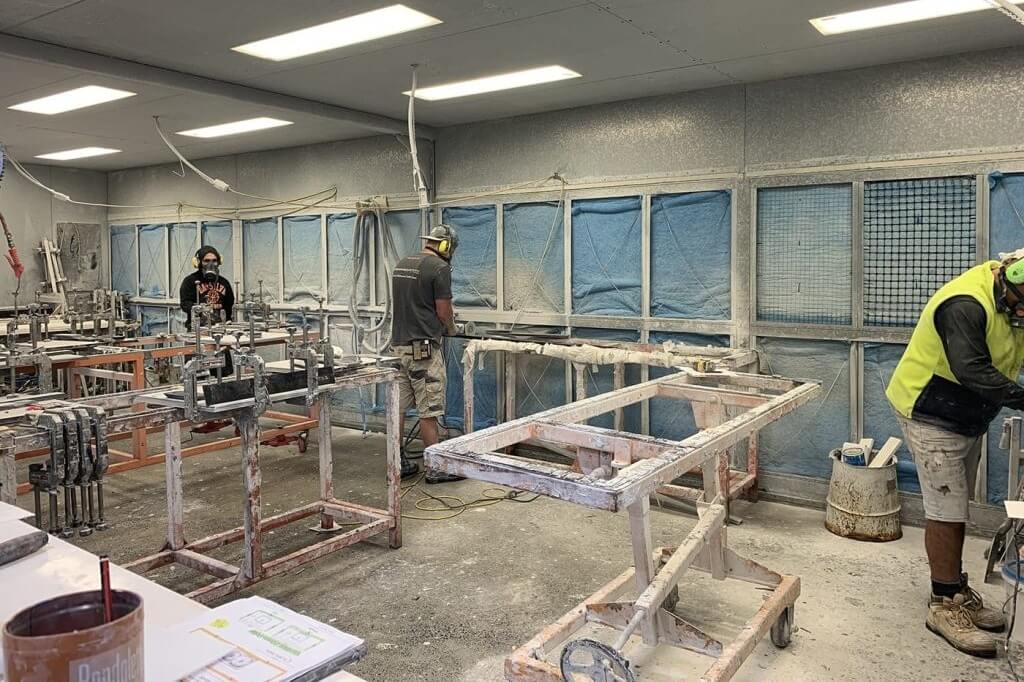
What is Silica Dust? A Complete Guide to RCS Risks and Controls
Silica dust—specifically Respirable Crystalline Silica (RCS)—is one of the most serious workplace health hazards in modern industry. While natural stone, concrete, and building materials are harmless when intact, cutting, drilling, or grinding them generates microscopic particles that pose severe, irreversible health risks to workers.
With an estimated 600,000 Australian workers currently exposed to crystalline silica across construction, mining, manufacturing, and trade industries, understanding what silica dust is and how to manage it is essential for workplace safety.
What is Silica and Where is it Found?
Silica is a naturally occurring mineral found in earth materials like sand, rock, stone, and clay. It exists in both non-crystalline (amorphous) and crystalline forms. Crystalline silica (commonly quartz) is the primary form that poses a danger to human health.
Common materials contain varying levels of crystalline silica:
|
Material Type
|
Average Crystalline Silica Content
|
|---|---|
|
Marble & Limestone
|
Up to 2%
|
|
Slate & Shale
|
20% – 45%
|
|
Granite
|
20% – 45%
|
|
Natural Sandstone
|
70% – 95%
|
|
Engineered Stone (legacy materials)
|
Up to 97%
|
When these materials are crushed, sawn, sanded, or polished—particularly without water suppression or proper extraction—fine airborne dust is released into the atmosphere.
The Invisible Hazard: Respirable Crystalline Silica (RCS)
Not all dust is created equal. Larger dust particles generated during construction are usually trapped by the human nose and upper throat. However, Respirable Crystalline Silica (RCS) refers to dust particles so tiny (typically under 10 micrometres in diameter) that they are invisible to the naked eye under normal lighting.
Because RCS particles remain suspended in the air for long periods, workers can easily inhale them without realising it. Once inhaled, these microscopic, sharp mineral particles penetrate deep into the lungs (the alveolar region), causing permanent tissue damage and scarring over time.
Health Risks Associated with Silica Dust Inhalation
Exposure to respirable crystalline silica causes progressive, incurable health conditions. The damage often develops slowly over years, though heavy exposure can trigger rapid disease onset:
- Silicosis: A chronic, incurable lung disease where severe scarring (fibrosis) stiffens lung tissue, reducing oxygen intake. Symptoms include shortness of breath, severe coughing, and progressive loss of lung function.
- Lung Cancer: Crystalline silica is classified as a Group 1 human carcinogen. Long-term workplace exposure significantly increases the risk of developing lung cancer.
- Chronic Obstructive Pulmonary Disease (COPD): Including chronic bronchitis and emphysema, leading to long-term airflow obstruction.
- Systemic Health Conditions: Inhaled RCS has also been linked to autoimmune conditions such as rheumatoid arthritis, systemic sclerosis, and chronic kidney disease.
High-Risk Work Activities and Industries
Workplace activities that generate dangerous levels of airborne RCS include:
- Excavation, earthmoving, paving, and surfacing operations.
- Cutting, drilling, chasing, or grinding concrete, bricks, tiles, or masonry.
- Abrasive blasting and dry sweeping of job sites.
- Processing, milling, and crushing rock in mining, quarrying, and tunnelling operations.
- Manufacturing and fabricating stone products or countertops.
Workplace Standards and the Hierarchy of Controls
In Australia, Safe Work Australia sets strict workplace rules to protect workers. The national Workplace Exposure Standard (WES) for respirable crystalline silica is 0.05 mg/m³ as an 8-hour time-weighted average (TWA).
To keep dust levels well below regulatory thresholds, duty holders must implement the Hierarchy of Controls:
- Elimination / Substitution: Replacing high-silica materials with low-silica or non-silica alternatives where possible.
- Engineering Controls: Utilising wet-cutting methods (water suppression) and local exhaust ventilation (LEV) on tools to capture dust at the source.
- Administrative Controls: Limiting time spent in high-dust areas, implementing strict housecleaning protocols (using H-class vacuum cleaners instead of dry sweeping), and establishing clear site procedures.
- Personal Protective Equipment (PPE): Providing respiratory protective equipment (RPE) fitted through formal face-fit testing as a final line of defence.
How Workplace Dust Levels Are Assessed and Verified
You cannot manage what you do not measure. Because respirable crystalline silica (RCS) particles are invisible to the naked eye, visual site inspections are insufficient to determine whether dust levels comply with the national Workplace Exposure Standard of 0.05 mg/m³.
To verify that dust controls are performing effectively, Australian Work Health and Safety (WHS) regulations outline specific testing protocols:
- Breathing Zone Air Monitoring: Personal air monitoring devices are worn by workers over an 8-hour shift to capture representative samples of the air they breathe during typical operations.
- Gravimetric & Laboratory Analysis: Airborne dust samples collected on filters are submitted to NATA-accredited laboratories. Advanced analytical methods (such as X-ray diffraction or infrared spectroscopy) are used to determine the exact concentration of crystalline quartz or cristobalite.
- Role of Occupational Hygienists: Qualified Occupational Hygienists design monitoring strategies, interpret exposure data against Safe Work Australia standards, and recommend targeted engineering controls to reduce risk.
If your facility or job site carries out high-risk dust-generating tasks, verified exposure testing is necessary. Reviewing licensed silica dust air monitoring service options ensures your air sampling protocols meet strict NATA accreditation and WHS legislative standards.
Frequently Asked Questions About Silica Dust
No. While larger nuisance dust particles are visible to the naked eye, respirable crystalline silica (RCS) particles are microscopic—typically smaller than 10 micrometres in diameter. They remain suspended in the air, unseen under normal lighting, allowing workers to inhale them deep into their lungs without noticing.
In Australia, the Workplace Exposure Standard (WES) for respirable crystalline silica is 0.05 mg/m³ averaged over an 8-hour work shift. Workplaces must implement control measures to ensure worker exposure remains well below this limit.
While both conditions cause permanent lung damage through inhaled airborne mineral fibres/particles, silicosis is caused specifically by crystalline silica dust (found in stone, concrete, and sand), whereas diseases like asbestosis and mesothelioma are caused by asbestos fibres. Both diseases cause lung tissue scarring (fibrosis) and are preventable through strict dust control measures.
Water suppression is highly effective at capturing dust at the point of generation, but it is rarely enough on its own. Comprehensive silica control requires a combination of engineering controls (such as local exhaust ventilation with HEPA filtration), administrative procedures, and correctly fitted respiratory protective equipment (RPE).

About the Author
Ibrahim Ech | Certified Occupational Hygienist (COH®) & Director at SESA
Reviewed and contributed to by Ibrahim Ech, a Full Member of the Australian Institute of Occupational Hygienists (AIOH) with COH® status since 2012.
With over two decades of industry experience across the commercial, industrial, and government sectors, Ibrahim specialises in occupational exposure assessments, hazardous materials management, and workplace health risks—including respirable crystalline silica control.
As the Director of SESA, he leads a team dedicated to helping Australian workplaces navigate WHS legislative requirements and prevent work-related lung diseases through scientific risk evaluation and practical control solutions.

